hub.brussels News Greenlab: Discover the new wave of circular industrial projects!
Greenlab: Discover the new wave of circular industrial projects!

Greenlab: Discover the new wave of circular industrial projects!

Brussels is a city of dreamers… but also a city of doers. Entrepreneurs rolling up their sleeves to build the city of tomorrow: post-carbon, post-pollution, post-waste. The Greenlab acceleration programme supports project leaders in the development of circular industrial models in urban environments. The goal? To prepare the commercial development of the projects, validate their feasibility, and pitch them to partners/investors.

Among this year’s participants, eight projects already stand out for their creativity, ambition and impact potential. Each one tackles an environmental or societal challenge through innovation, local production or upcycling.

Here’s a glimpse of these initiatives that could well help Brussels leap into the future.

Augeas: a smart, collaborative waste container

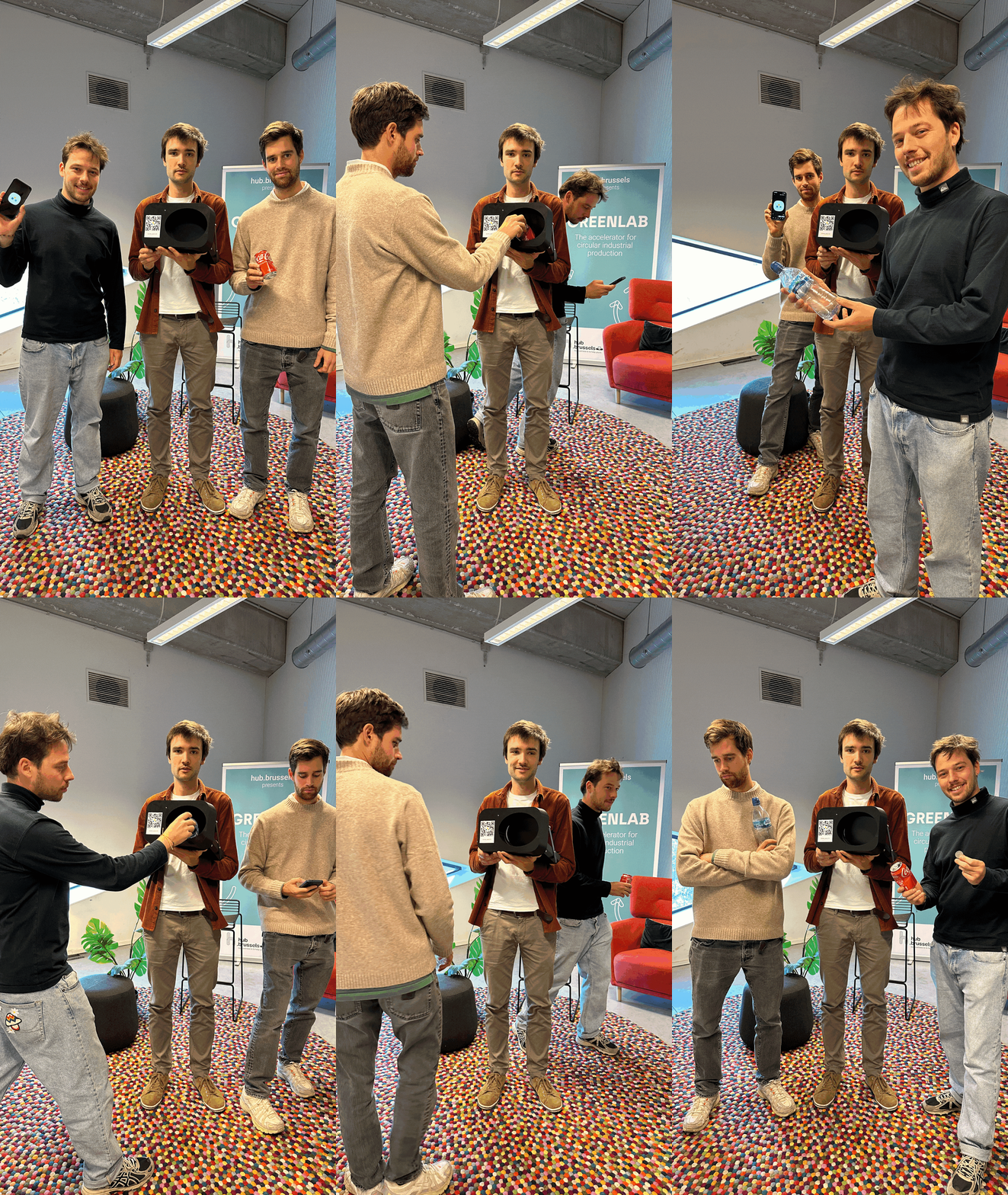
While travelling in emerging countries, Grégoire Heymans was struck by how much waste ends up in nature due to a lack of efficient collection systems. Alongside Félix de Patoul and Quentin Desclée, he created Augeas: a smart waste container designed to improve sorting at source in underserved areas.

Equipped with sensors, blockchain tracking, and a reward system to encourage correct sorting, the device is low-tech, affordable and easily deployable. The solution targets both neglected neighbourhoods in Europe and under-equipped regions in the Global South.

Their ambition through Greenlab?

To structure their business model, test their prototype in the field, and strengthen the project’s circular logic.

Why Brussels?

Because parts of the city still lack basic waste collection infrastructure. Augeas offers a quick, simple and scalable solution, perfectly suited to the urban environment.

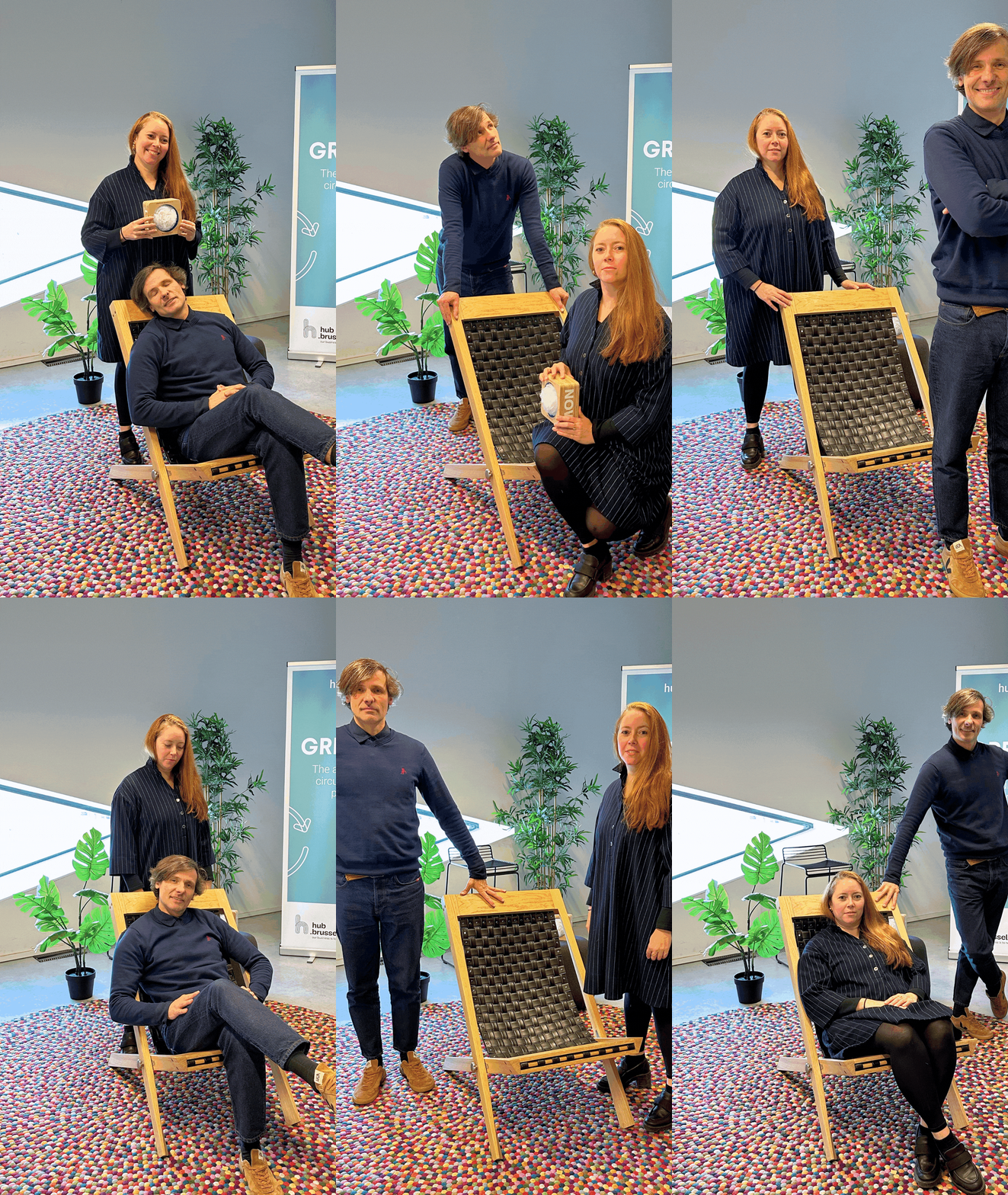
Eggwave: turning egg boxes into acoustic bricks

While studying textile design at La Cambre, Yoann Piccardi discovered the acoustic and aesthetic potential of moulded pulp—the material used for egg boxes. This inspired him to launch Eggwave, a reuse-based design project at the crossroads of craftsmanship and innovation.

Eggwave transforms ordinary waste into modular acoustic bricks, made without glue or resin, and fully dismantlable. One tonne of paper stores about 300 kg of CO₂, making this a naturally eco-friendly material.

Beyond the raw material, the project promotes a poetic, minimalist aesthetic—and a commitment to local, artisanal production.

His ambition through Greenlab?

To structure production, build a solid economic model, and develop a network of local partners who share his values.

Why Brussels?

Because the city is fertile ground for combining art, ecology and social innovation.

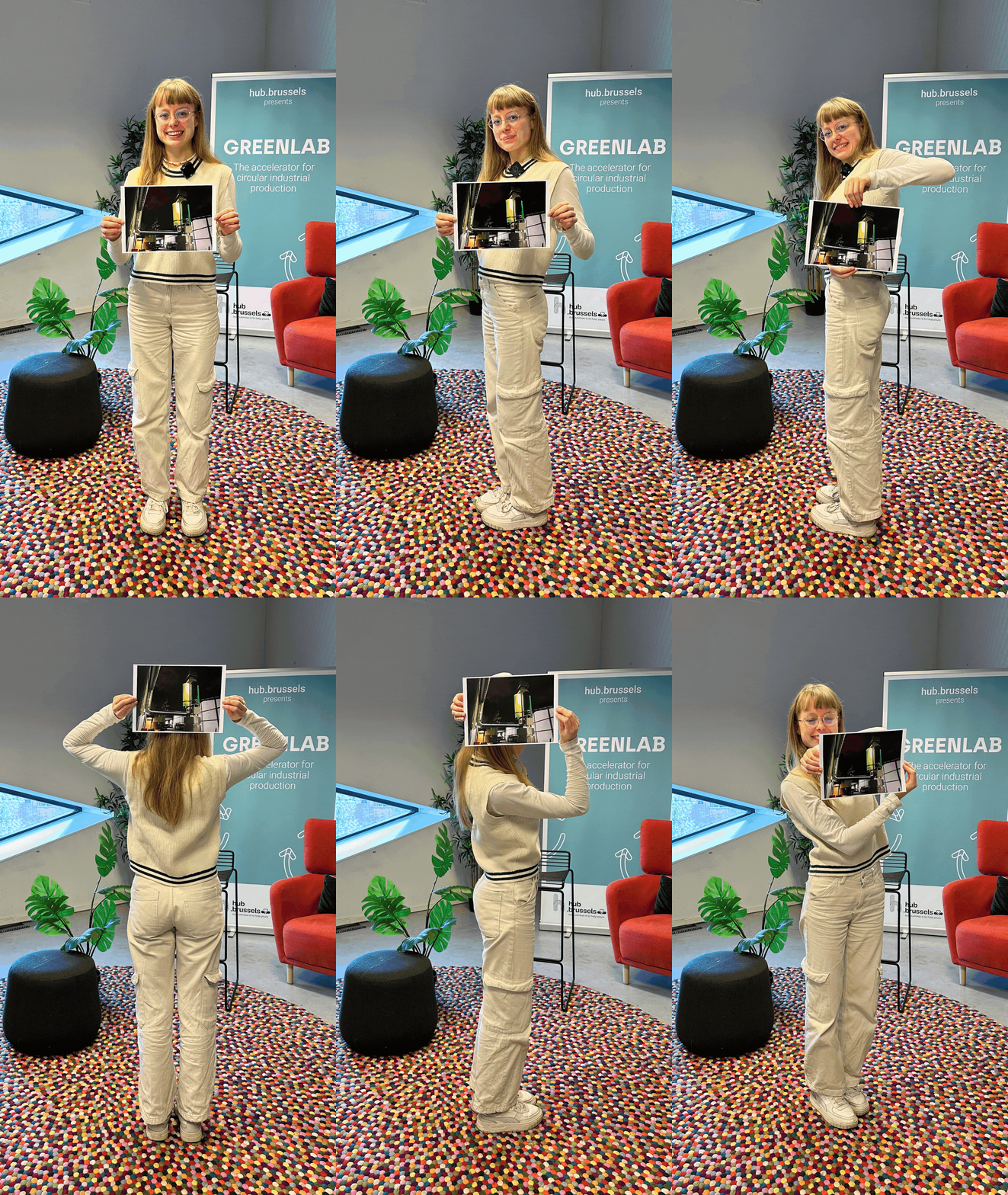
Living Sculptures: art that purifies the air

Faced with the dual crisis of climate change and urban pollution, a multidisciplinary team imagined a bold new solution: a monumental sculpture that purifies the air. Using an integrated microalgae bioreactor, the structure captures CO₂ and nitrogen oxides, while generating biomass that can be reused.

With Living Sculptures, Anaïs Stradiot, Marie Georlette, Carlos and Israël aim to turn public spaces into living ecosystems, where art, science and social inclusion come together. The project also seeks to create local jobs, foster collaborations with other artists, and raise public awareness through participatory workshops.

Their ambition through Greenlab?

To structure their economic model, finalise a large-scale prototype and secure funding to launch production.

Why Brussels?

Because the city faces significant air quality challenges, and these sculptures offer a visible, educational and measurable solution. With mandatory ESG reporting coming for large companies in 2026, Brussels is also a strategic showcase for this kind of innovation.

WAND: branded objects made from business waste

Architect Grégory Roger and fashion stylist Emilie Beaumont share a common belief: every material has value, especially when reimagined with care. This philosophy gave birth to WAND, an ecodesign studio that transforms unused stock and corporate waste into beautiful, functional and sustainable objects.

From office supplies to trophies, event decor or branded gifts, WAND creates tailor-made solutions through a network of local artisans, inclusive workshops and small industrial players. Their goal: blending design, impact and social inclusion.

Their ambition through Greenlab?

To optimise internal processes, sharpen their commercial strategy and integrate ESG and carbon tracking tools into their offering.

Why Brussels?

Because the region is rich in materials to reuse, circular economy players, and an entrepreneurial network open to sustainable creation.

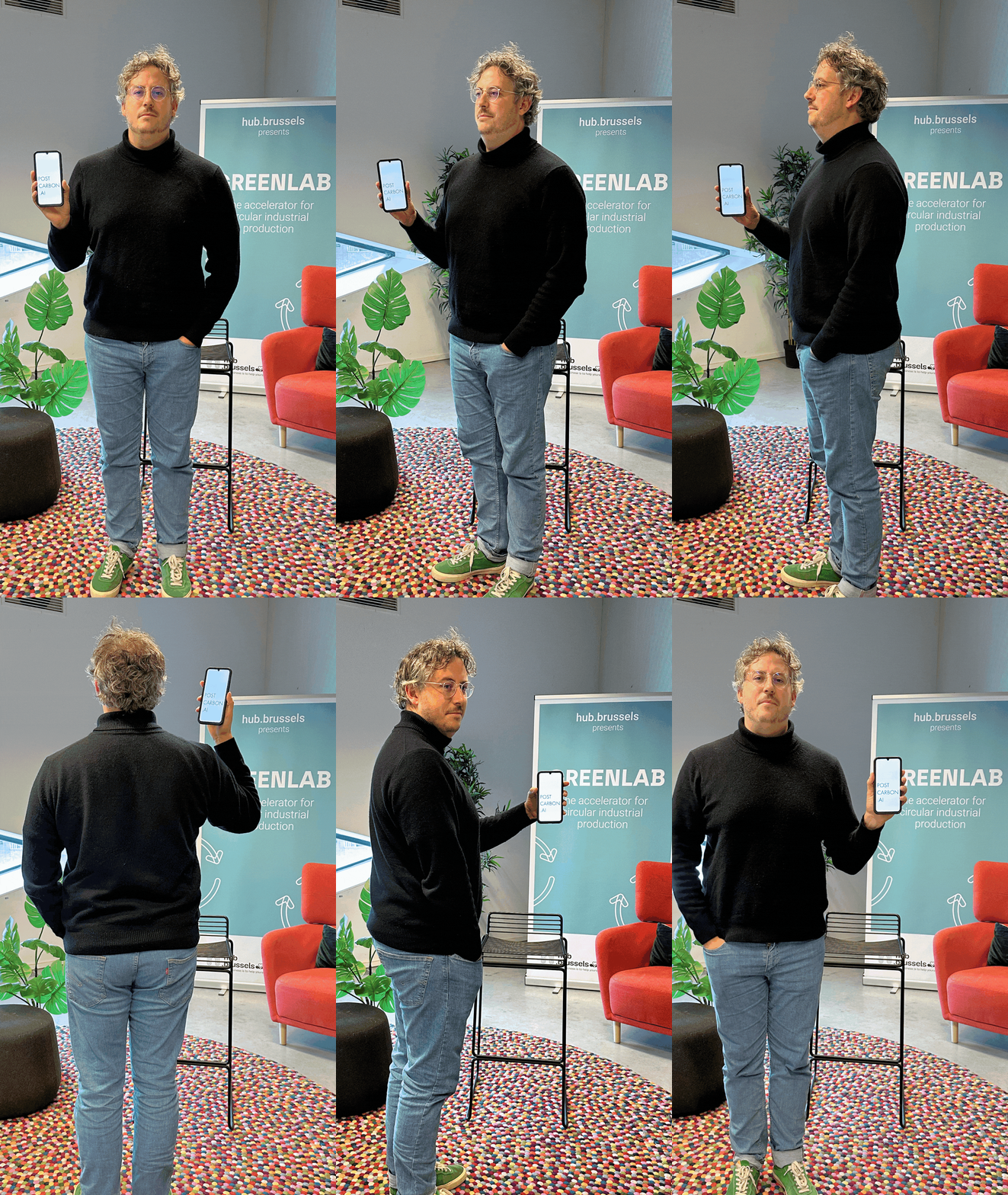
Post Carbon: helping buildings go truly green, with AI

With Post Carbon, Brussels-based architect and sustainability consultant Raymond James Wright is helping real estate professionals make their buildings truly sustainable. His AI-powered diagnostic tool compares various investment scenarios, complete with carbon impact, cost, energy savings and material data.

The stakes are high: the building sector accounts for nearly 40% of global emissions. In Brussels, it’s even more critical: buildings are responsible for around 60% of direct CO₂ emissions and over 70% of final energy use (source: Renolution).

His ambition through Greenlab?

To launch a beta version of the tool, validate its use cases with real clients, and build a robust financial plan.

Why Brussels?

Because he knows the city inside out—and believes the ecological transition depends on renovating the existing building stock. As the capital of Europe, Brussels also serves as a test market and regulatory lever for scalable, low-carbon innovation.

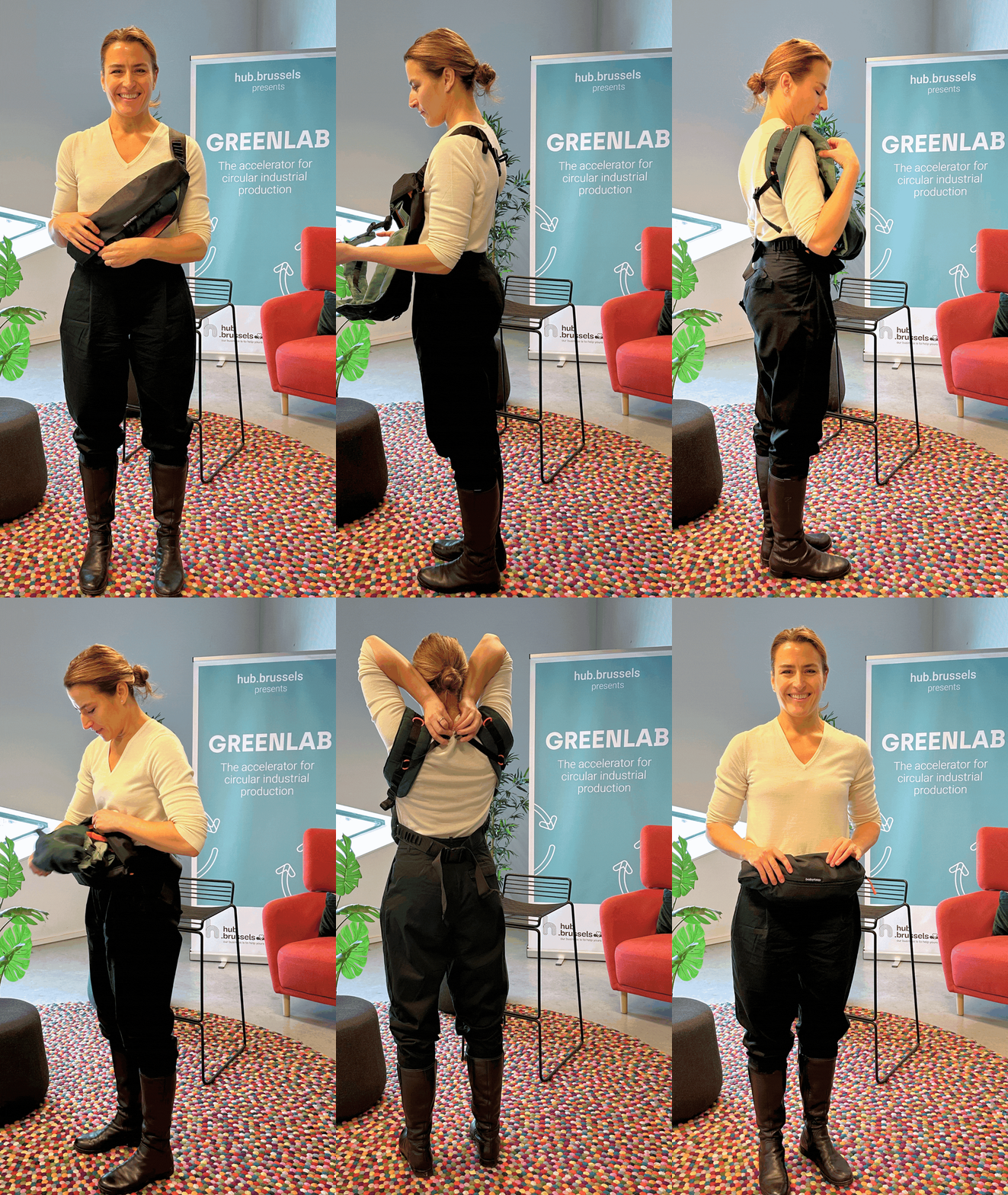
babyloop: rethinking the baby carrier as a circular system

For more than ten years, Michaela Andrejaš has supported families as a physiological babywearing consultant. This hands-on experience allowed her to identify a structural issue: today’s baby carriers are designed as disposable products—often complex to use and quickly outdated—forcing families to purchase several carriers as their child grows.

babyloop was born from this observation. More than just a baby carrier, it is a modular and evolutive system, designed to adapt to both child and parent from birth through early childhood, without compromising on comfort, usability or safety.

The objective is clear: to replace multiple products with a single one, drastically reduce overconsumption, production volumes and textile waste, and offer a sustainable alternative to a market that remains largely linear.

Her ambition via Greenlab?

To accelerate babyloop’s industrial development, structure its market launch, and embed its business model from the outset in a circular, responsible and scalable approach.

Why Brussels?

Because the city offers a unique, human-scale ecosystem where social innovation, engaged design and the circular economy can meet and reinforce one another.

CHOP: glass upcycling, one bottle at a time

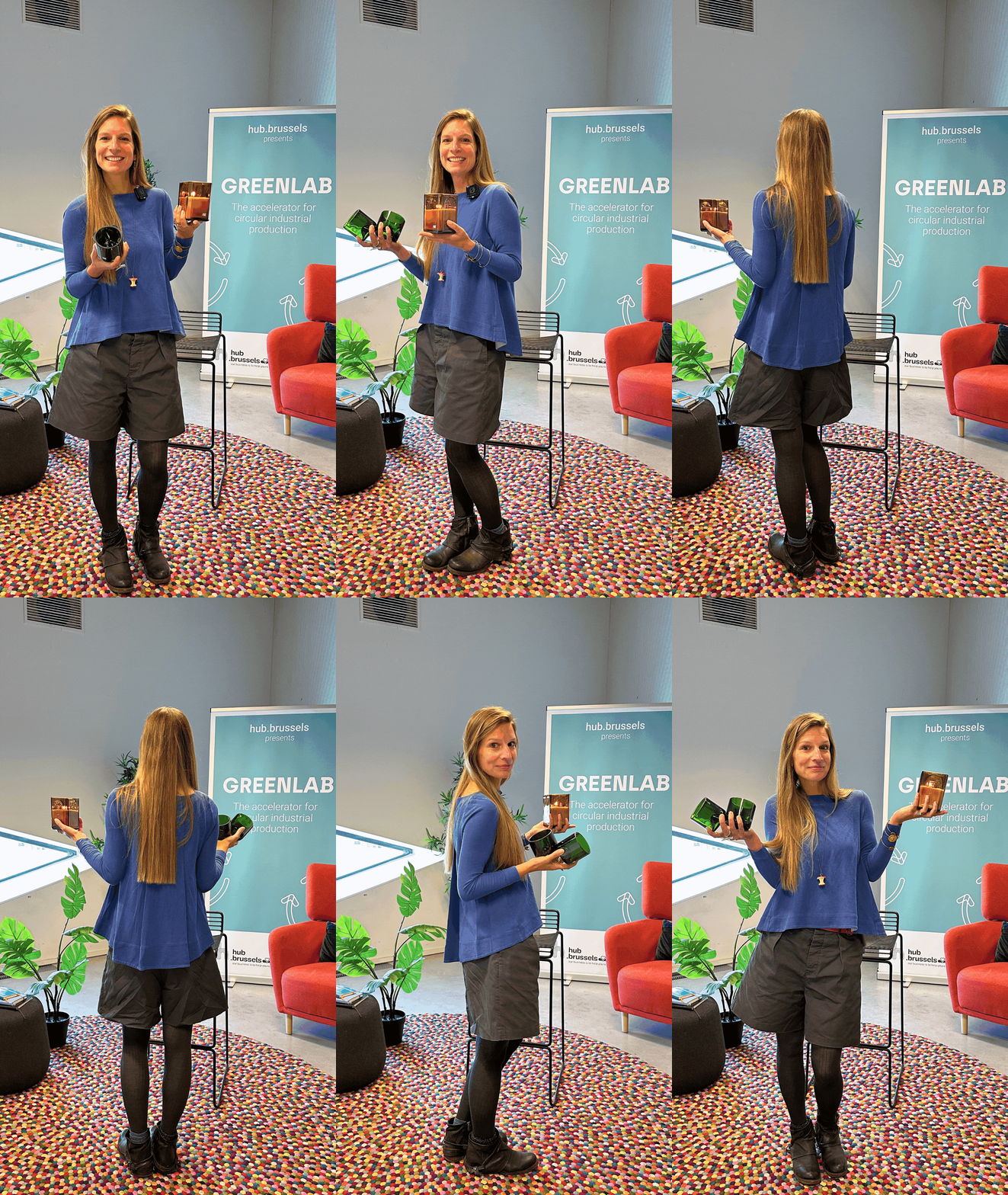
On holiday in Mauritius, Samira Decroix came across glasses made from recycled soft drink bottles. The idea stuck with her—and once back in Brussels, she launched CHOP, a small workshop that upcycles non-returnable glass bottles from local bars and restaurants into unique glasses, vases or candles.

Every week, over one million bottles are thrown away in Brussels. CHOP offers an alternative: a cold-working process (no kilns or re-melting) that’s both energy-efficient and water-saving, while celebrating hand-crafted design.

Her ambition through Greenlab?

To professionalise her operations, grow her customer base, and root CHOP in a sustainable, local model.

Why Brussels?

Because the city is both a source of raw material and a market full of design-conscious, eco-minded consumers.

Garden Stack: 3D-printed plant irrigation, made in Brussels

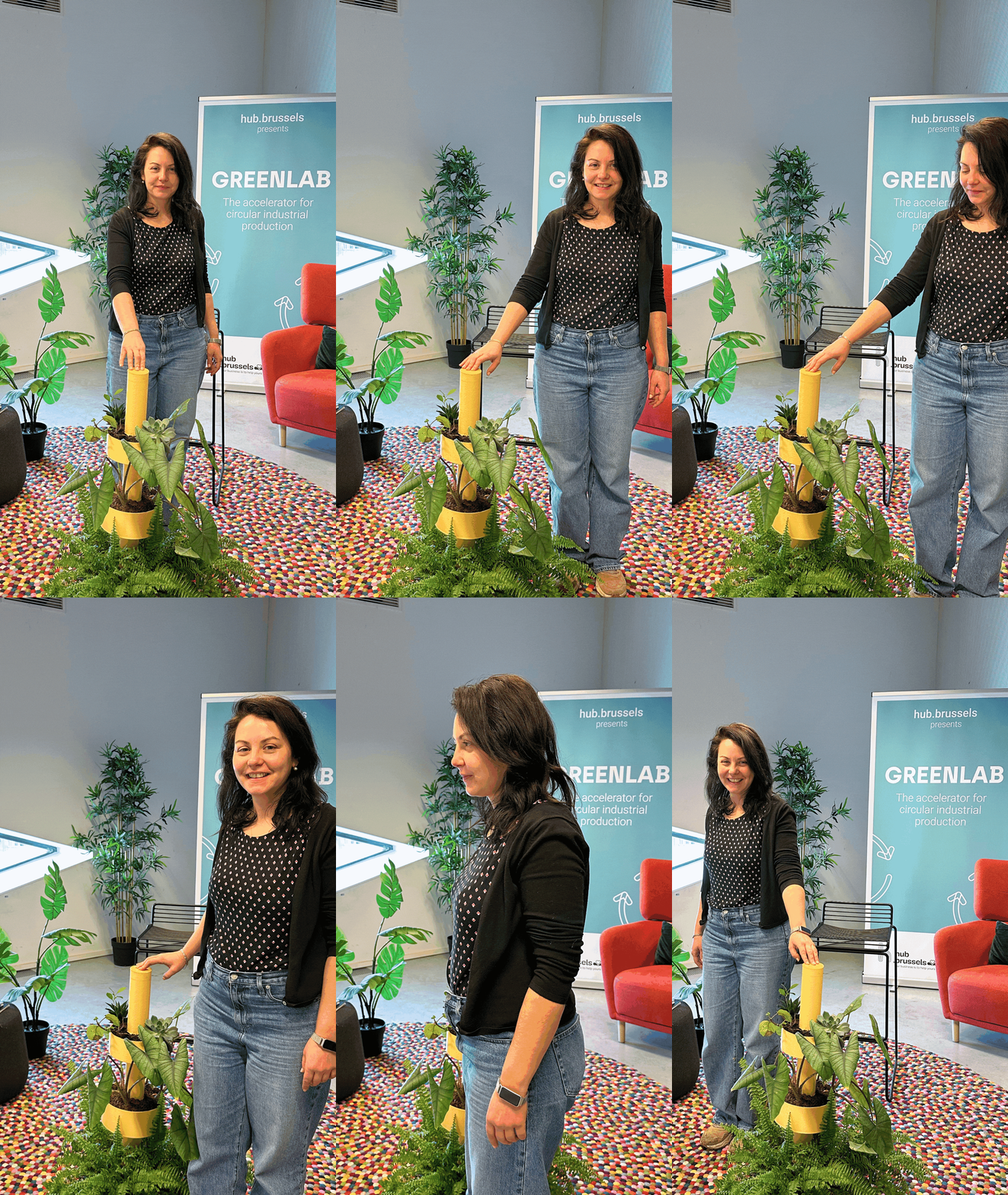
During the pandemic, Daniel Matthews Ferrero spent six months in a family apartment in Spain—watering more than 30 plants every day. Out of this daily chore came an idea: an indoor gardening system that requires minimal maintenance while adapting to urban life.

With Marta Matrakova, he developed Garden Stack: a modular, vertical planter in terracotta with automatic irrigation, produced entirely by 3D printing in their own Brussels-based print farm, MadeinBXL.com. The goal: help people grow at home while saving water, energy and space.

Their ambition through Greenlab?

To strengthen the circular model of their business and prove that sustainability and tech can go hand in hand.

Why Brussels?

Because the city offers fertile ground for local, collaborative, and innovative production—supported by an engaged community.

Plus de nouvelles sur notre blog

After Audi: Brussels foreign trade in the first half of 2025

After Audi: Brussels foreign trade in the first half of 2025

Posted on 28/01/2026
After Audi: Brussels foreign trade in the first half of 2025
Greenlab: Discover the new wave of circular industrial projects!
Circular economy

Greenlab: Discover the new wave of circular industrial projects!

Posted on 09/01/2026
Greenlab: Discover the new wave of circular industrial projects!
Casablanco wins the 2025 Social Economy Prize
Social entrepreneurship

Casablanco wins the 2025 Social Economy Prize

Posted on 05/11/2025
Casablanco wins the 2025 Social Economy Prize